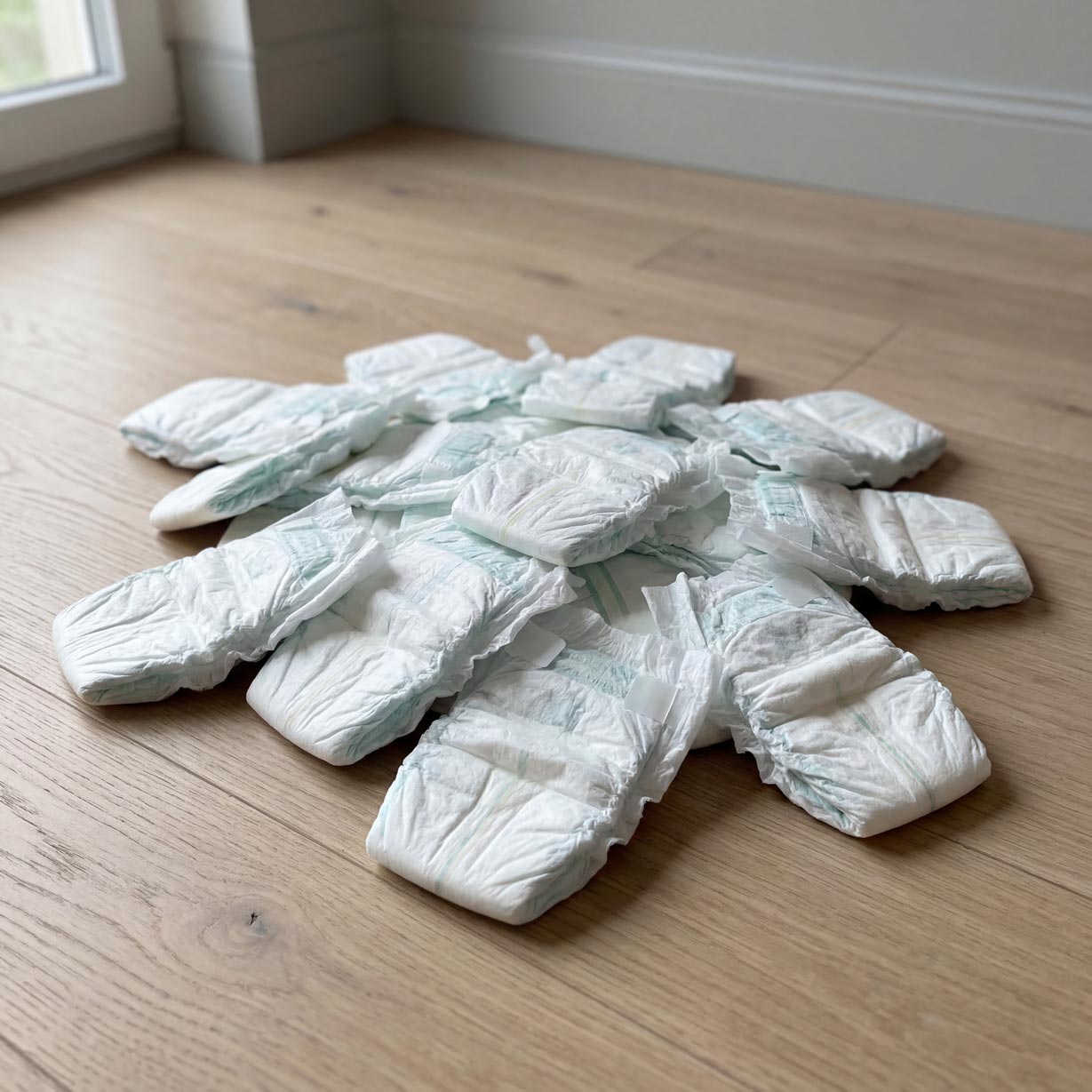
For decades, the only “solution” offered to men with urinary leaks was the adult diaper. Bulky, plastic, often poorly designed for the male anatomy, expensive in the long run, environmentally disastrous: this option resembles a punishment more than a real answer. The good news is that 2026 finally offers credible alternatives.
This guide reviews the best options available today, their advantages, their limits, and who they’re really for.
Why look for an alternative to adult diapers?
The reasons are numerous and rarely obvious to those who haven’t tried.
Cost. A man with moderate incontinence consumes 4 to 6 disposable products per day. At an average of $0.40 to $0.80 per unit, that’s $50 to $150 per month, or $600 to $1,800 per year. Over 10 years, the bill exceeds $10,000.
Environmental impact. A single disposable adult diaper takes 500 years to decompose. A user produces about 1 ton of non-recyclable waste over a decade.
Comfort and discretion. Disposables are bulky, often noisy, sometimes irritating to the skin. The “diaper” effect is psychologically heavy — many men describe a feeling of regression that affects self-image.
Skin health. Constant contact with damp non-breathable plastic promotes irritation, dermatitis, and infection.
The alternatives below address each of these issues, with varying degrees of effectiveness depending on need.
The 4 main alternatives in 2026
1. Reusable absorbent underwear (the new reference)
How they work: at first glance, these are normal boxers or briefs — except they integrate a discreet absorbent technical lining at the crotch. The fabric absorbs liquid, retains it without leaking, and stays surface-dry.
Who they’re for: men with light to moderate incontinence (a few drops up to roughly 250 ml of liquid per day).
Major advantage: indistinguishable from normal underwear. No diaper effect, no audible noise, no specific waste.
Average cost: $25 to $50 per pair. A wardrobe of 5 to 7 pairs covers daily needs.
Real lifespan: 200+ washes for the best brands.
Material to favor: organic bamboo (better antibacterial breathability and natural odor control) over polyester.
Who manufactures them? Several specialized brands have emerged in recent years. Among them, the US brand Orykas offers a complete range of men’s absorbent underwear in organic bamboo, designed specifically for men with light to moderate incontinence.
2. Reusable absorbent pads (slip into normal underwear)
How they work: an absorbent pad of variable thickness is placed in conventional underwear. Unlike disposable pads, these versions are washable.
Who they’re for: men who already have a regular underwear wardrobe they want to keep.
Major advantage: flexibility. The same underwear can be worn with or without the pad depending on the day or activity.
Limit: the pad can shift during intense effort. Less discreet than integrated underwear.
Average cost: $7 to $20 per pad, washable 100+ times.
3. The penile clamp (Cunningham)
How it works: a discreet device that gently compresses the penis to mechanically prevent urination. Removed to urinate normally, then replaced.
Who it’s for: men with significant stress incontinence (typically post-prostatectomy), who need short-term reliability (sport, important meeting, travel).
Major advantage: near-total reliability when properly sized. No need for absorbent product.
Limits: must absolutely be removed every 2 to 3 hours to prevent ischemia. Not suitable for all-day continuous use. Requires medical advice for proper sizing.
Average cost: $40 to $80, lifespan of several months.
4. The penile sheath (external catheter / condom catheter)
How it works: a flexible sheath placed around the penis, connected to a small leg-worn collection bag.
Who it’s for: men with severe to total incontinence who require maximum reliability over long periods.
Major advantage: total reliability, no leaks, even in volume.
Limits: specific learning curve to put on. Requires daily change. Skin can become irritated. Less psychologically comfortable than absorbent underwear.
Average cost: $1.50 to $3 per sheath, $10 to $20 per bag, daily change.
Decision matrix: which solution for which situation?
| Situation | Recommended primary solution | Backup |
|---|---|---|
| Light leaks (a few drops a day) | Reusable absorbent underwear (light) | — |
| Moderate leaks (post-effort, urge) | Reusable absorbent underwear (moderate) | Penile clamp during sport |
| Major post-prostatectomy stress leaks | Reusable absorbent underwear + penile clamp during exertion | Disposable products in early recovery |
| Severe to total incontinence | External catheter | Reusable absorbent underwear at home |
| Travel, special occasions | Reusable absorbent underwear (highest absorption) + spare | Penile clamp |
What to combine?
In practice, most men with incontinence combine 2 or 3 solutions:
- At home, in low-pressure situations: reusable absorbent underwear
- At work or in social situations: reusable absorbent underwear (max absorption) + spare in bag
- During sport or intense effort: penile clamp (short duration)
- During long travel: maximum absorption underwear + penile clamp as backup
What to avoid
Cheap incontinence pads sold in pharmacies. Often poorly designed for the male anatomy, they shift, leak, and irritate the skin.
Improvising with sanitary pads designed for women: morphology is different, position and absorption don’t match.
Generic diapers (Walmart-grade): even at low cost, the volume of waste produced and the long-term cost make them a bad calculation. The price-per-pair of reusable absorbent underwear is amortized in 3 to 6 months.
Buying low-quality polyester reusable underwear. Synthetic fibers retain odors, encourage bacterial development, and lose effectiveness quickly. Always favor natural materials (organic bamboo, certified organic cotton).
What to remember
In 2026, no man should have to use a traditional adult diaper for light to moderate incontinence. Reusable absorbent underwear has become the new reference: more comfortable, more discreet, more economical, more eco-friendly. For more severe situations, penile clamps and external catheters complete the toolkit.
The first step is identifying your real situation — type of leakage, daily volume, lifestyle — to choose the right solution. Don’t hesitate to talk to your doctor or a stomatherapist nurse who can guide you toward the best option.
Important: This article is for general informational purposes only and does not constitute medical advice. Consult a qualified healthcare provider for any questions about your health, symptoms, or treatment options.